Puretone offers Cognitive Screening with Cognivue at select White Rock and Surrey clinics for adults and families who want structured screening information when hearing, listening effort, focus, memory concerns, or communication changes seem to overlap.
Most people do not start by asking for cognitive screening. They say conversation is harder to follow, restaurants feel exhausting, family discussions take more effort, or they can hear people talking but still miss details.
Sometimes that feels like a memory problem. Sometimes hearing is part of the picture. When speech is less clear, the brain often works harder to fill in missing words, keep up with conversation, and stay focused.
At Puretone Hearing Clinic, your Audiologist looks at the broader communication picture. Cognivue can add a structured screening layer when hearing concerns, listening fatigue, focus, memory concerns, or family observations need a calmer first step.
Important: Cognivue is a screening tool, not a diagnosis. It does not diagnose dementia, Alzheimer's disease, memory loss, or any specific cognitive condition. If broader follow-up is appropriate, your Audiologist explains that clearly and guides patients toward the appropriate physician-led pathway.
Your ears collect sound, but your brain does the work of listening.
When hearing is less clear, the brain often has to fill in missing words, separate speech from background noise, and keep track of conversation. That is why some adults describe the problem as mental fatigue rather than simply saying things sound quiet.
You may notice it in ordinary places. A restaurant feels harder than it used to. A family gathering takes more concentration. A long conversation leaves you tired. Someone says, 'I already told you that,' but the full message may not have been heard clearly in the first place.
This extra strain is often called listening effort. It does not automatically mean there is a cognitive problem. But when hearing, focus, memory concerns, and communication changes overlap, it can be worth looking at the full picture instead of guessing.
When the brain is working too hard just to decode speech, everyday communication can feel more difficult than it should.
Cognivue is a cognitive screening tool that can help provide a structured baseline of cognitive performance.
At Puretone, selected patients can complete a Cognivue screening as part of a broader hearing and communication conversation with their Audiologist.
The value is not in creating labels. The value is helping patients and families move from vague worry toward clearer information about what may be contributing to communication difficulty.
Important Clarification: Cognivue does not replace physician care, medical diagnosis, neuropsychological evaluation, or a full cognitive assessment. It is used as a supportive screening tool when appropriate.
For many families, having a structured starting point feels calmer than trying to interpret every change alone.

This screening is most useful for adults who want a baseline or families who feel something has changed.
Some patients ask because listening has become unusually tiring. Others come because a spouse or adult child has noticed more missed details, more repetition, or more effort during everyday conversation.
Not every patient needs cognitive screening. For many people, the first step may simply be a Hearing Test. When concerns overlap, Cognivue can support a more complete conversation.

If hearing loss is part of the communication picture, improving speech clarity may reduce listening effort for some patients.
Hearing support is not cognitive treatment, and hearing aids do not diagnose or treat dementia. But when hearing loss is present, clearer access to speech can make conversation easier to follow and may reduce some of the effort spent trying to decode missing words.
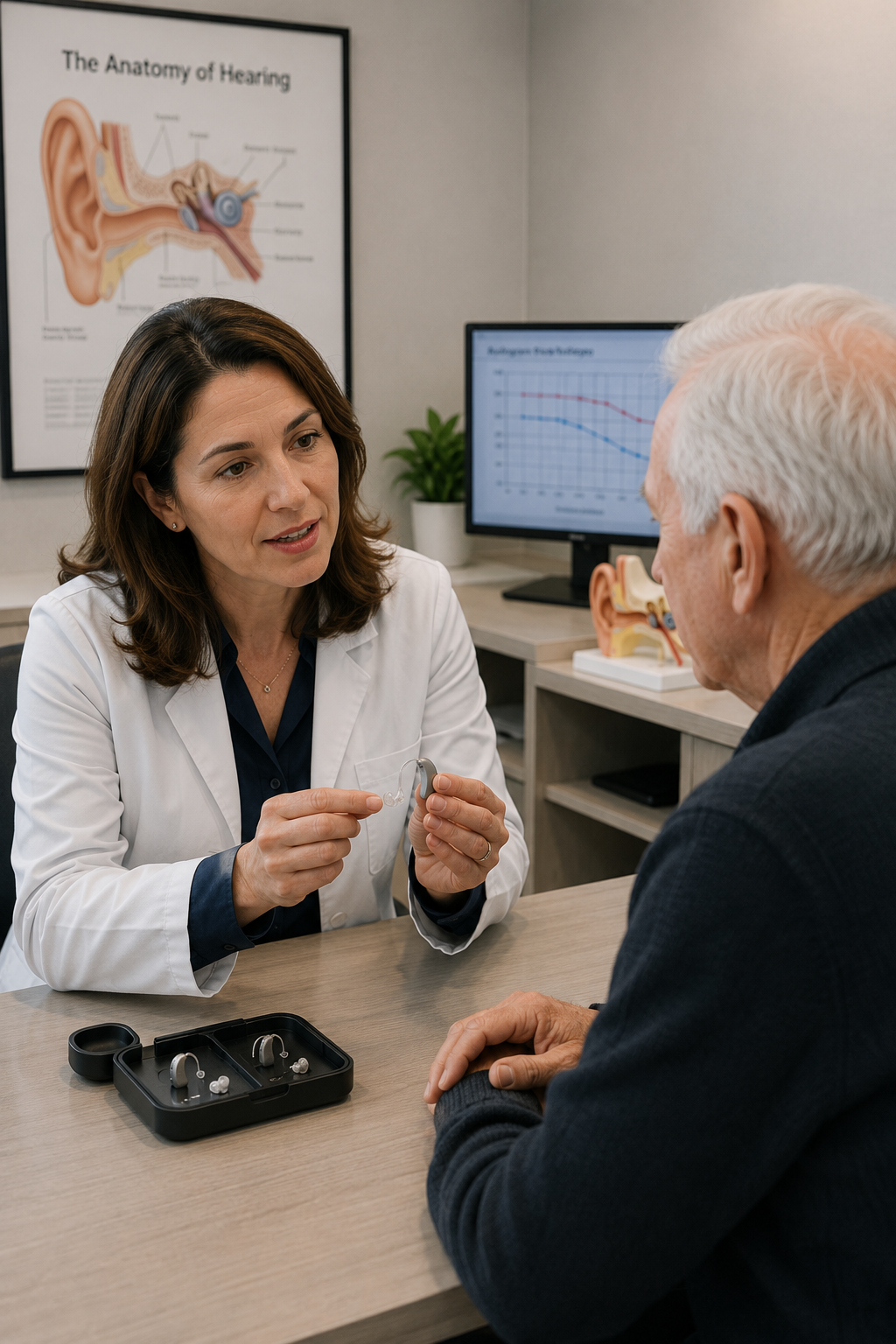
If hearing loss is part of the picture, your Audiologist can discuss whether Prescription Hearing Aids are appropriate. Depending on the person, that may include Rechargeable Hearing Aids, Bluetooth Hearing Aids, Smart Hearing Aids, or AI-assisted hearing-aid features that support background-noise management.
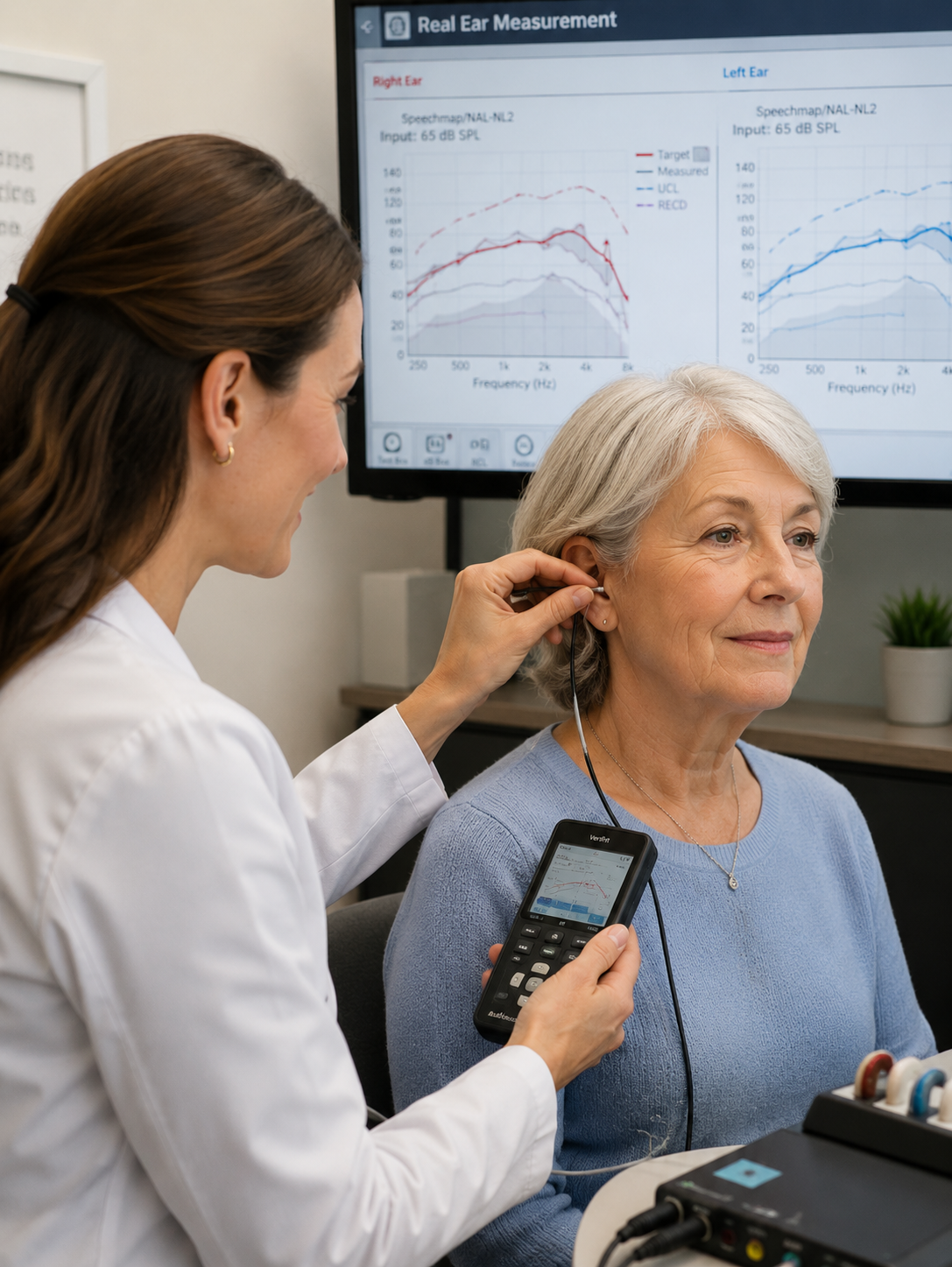
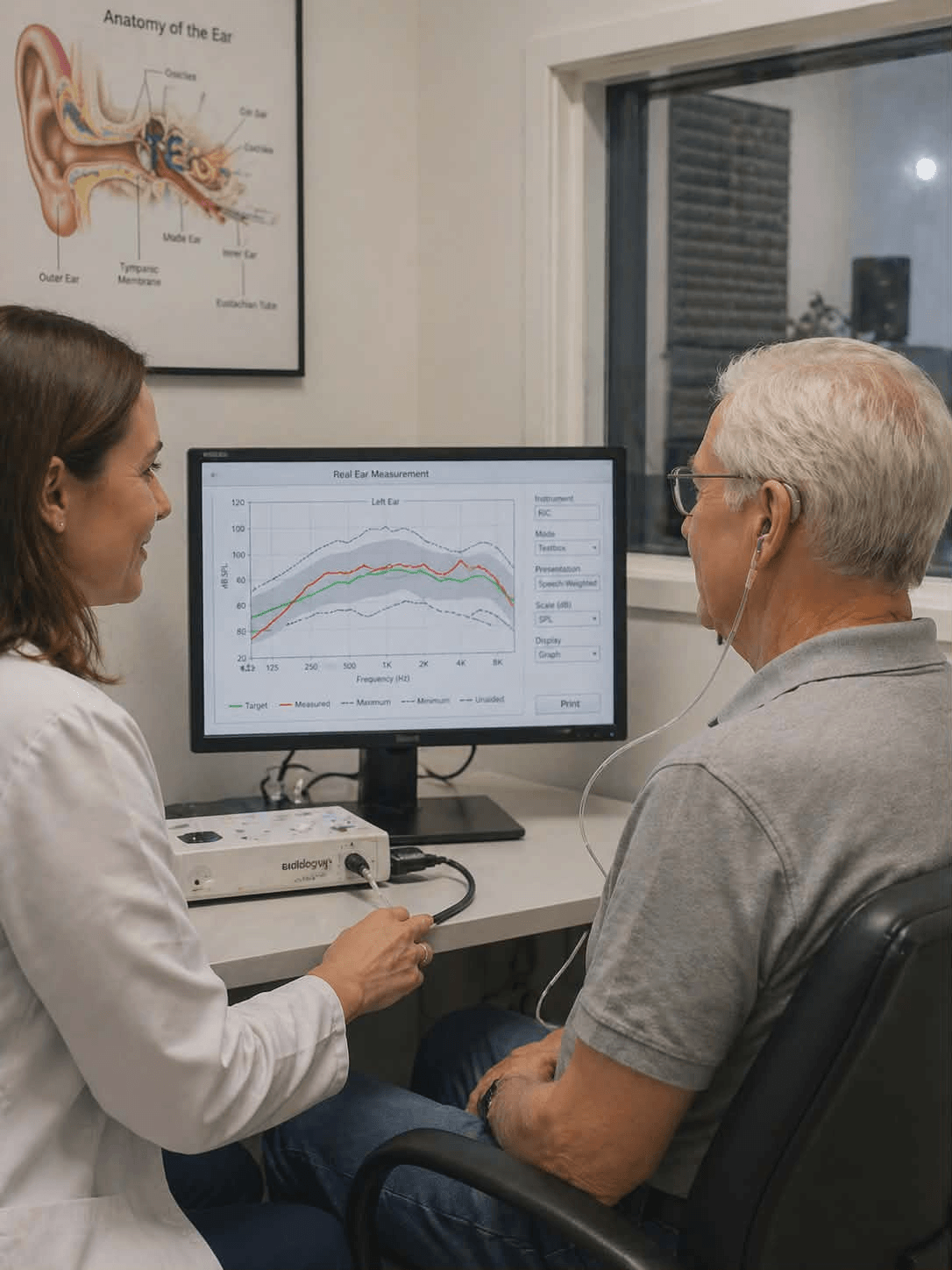
The recommendation still depends on the Hearing Test, communication goals, comfort, dexterity, daily routine, and a careful hearing aid fitting process. If hearing aids are fitted, Real-Ear Measurement helps verify the fitting in the ear.
The goal is not to sell technology. The goal is to understand whether hearing support is part of a broader communication plan.
Families are often the first to notice when communication starts to change.
Adult children and spouses may notice a loved one seems more tired after conversation, more hesitant in group settings, or more forgetful when the real issue may be missed details during speech.
A hearing and cognitive screening appointment can provide a respectful, structured starting point. Family members are welcome when appropriate, and the explanation should make the situation feel less overwhelming.
Cognitive Screening with Cognivue is currently available through Puretone's White Rock and Surrey clinics.
This service is part of a specialized assessment pathway and is currently routed through White Rock / South Surrey and Surrey.
A strong fit for patients who want a calmer assessment setting with support around hearing, tinnitus, listening effort, cognitive screening, and premium hearing guidance.
We explain the fee clearly before any screening begins.
Cognitive screening may be offered as an advanced service or as part of a broader assessment conversation, depending on the situation. When you book, we explain the fee structure so you know what to expect.
Depending on your extended health plan, some hearing-related assessment services may be partially covered. Coverage varies, so exact eligibility should be confirmed with your insurer.
If additional documentation or a more formal report is needed for a Family Physician conversation, we can explain that process clearly, including any added reporting fee where applicable.
Cognivue is a cognitive screening tool used to provide structured screening information. At Puretone, it is used as part of a broader conversation about hearing, listening effort, and next-step guidance.
No. This screening does not diagnose dementia, Alzheimer's disease, memory loss, or any specific cognitive condition. It is a screening tool, not a stand-alone diagnostic test.
It may be worth discussing for adults who want a proactive baseline, patients who feel unusually drained by listening, or families who have noticed changes in communication, focus, or everyday function.
Not always, but hearing and listening effort often overlap. In many cases, hearing assessment is an important part of understanding the full communication picture.
In some patients, yes. When hearing loss is present, improving speech clarity can reduce listening effort and make conversation easier to follow. Results vary and depend on the person's hearing profile, fitting, and real-life needs.
It can support the broader conversation, but it does not replace a Hearing Test or Audiologist-led hearing-aid fitting decision. If hearing loss is present, your Audiologist can discuss whether Smart, Rechargeable, Bluetooth, or AI-assisted hearing-aid features are relevant.
Cognitive Screening with Cognivue is currently routed through White Rock / South Surrey and Surrey clinics. It should not be shown as a Vancouver service unless availability changes.
Yes. Many patients find it helpful to bring a spouse, adult child, or support person to the appointment.