





Puretone Hearing Clinic -Registered Audiologists Surrey and Vancouver

Hearing Loss

Hearing loss often begins with speech becoming less clear, background noise feeling harder to manage, and conversations taking more effort than they used to.
Many people do not first notice hearing loss in a quiet room. They notice it at dinner. In the car. On the phone. In a restaurant. During a family gathering. The words are there, but they are not as clear as they used to be.
For many adults, the problem is not volume alone. It is clarity. A common way people describe it is: “I can hear people talking, but I cannot always understand the words.”
At Puretone Hearing Clinic, our Registered Audiologists help adults across Surrey, White Rock, and Vancouver understand whether hearing has changed, what type of hearing loss may be involved, and what the right next step should be through independent, Audiologist-led care.
For some patients, the answer is reassurance and monitoring. For others, it may be ear care, tinnitus support, Prescription Hearing Aids, or a closer review of current hearing aids that are no longer helping enough.
  • Registered Audiologists
  • Hearing Tests
  • Prescription Hearing Aids
  • Hearing Aid Fitting Guidance
  • Surrey
  • White Rock
  • Vancouver

What Hearing Loss Feels Like in Real Life

Hearing loss does not always feel like silence. Often, it feels like strain, missed words, and extra effort.
Hearing loss can happen gradually or more suddenly. It can affect one ear or both ears. It can be mild, moderate, or more significant.
Some people mainly miss softer sounds. Others hear plenty of sound, but struggle to understand speech clearly. That is why hearing loss can be confusing. You may hear someone talking, but still miss the important parts of the sentence.
A spouse may sound clear in a quiet room but harder to follow in the car. A group conversation may feel tiring even though you can hear plenty of noise around you. Family members may notice repeated misunderstandings, louder television volume, or less participation in social settings before you notice the pattern yourself.

Common Signs:

  • Speech sounds less clear than before
  • Background noise feels harder to manage
  • People seem to mumble
  • You ask others to repeat themselves more often
  • The television or phone volume is higher
  • Group conversations feel tiring
  • Phone calls are harder to follow
  • One ear feels worse than the other
  • A blocked or muffled feeling keeps returning
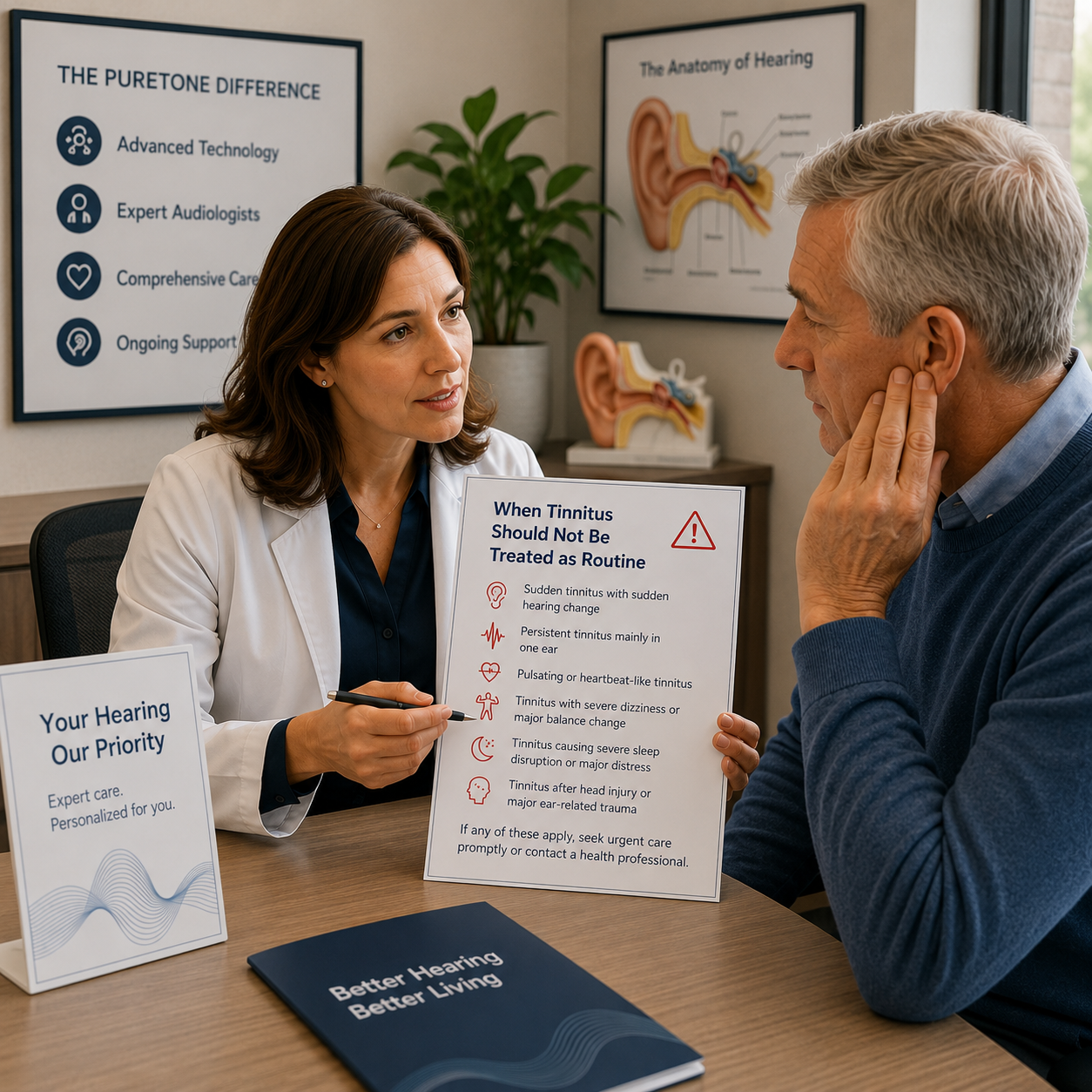
  • Tinnitus appears alongside hearing changes
  • Current hearing aids no longer seem to help enough
If listening is taking more effort than it used to, a hearing test with a Registered Audiologist is usually the best place to start.

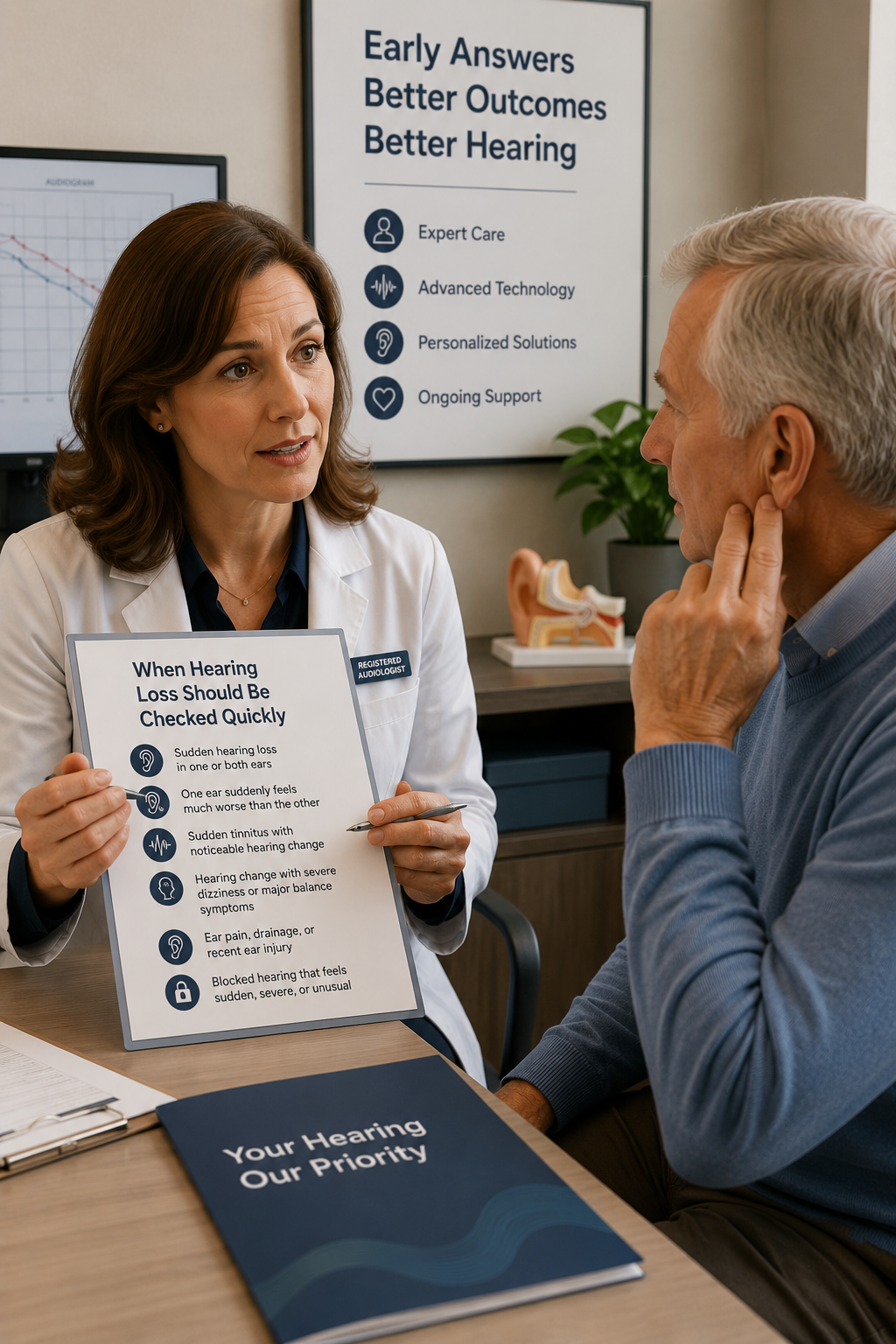
When Hearing Loss Should Be Checked Quickly

Some hearing changes should not wait for a routine hearing appointment.
Many hearing changes develop slowly, but certain patterns need faster attention. Sudden hearing loss, a major change in one ear, sudden tinnitus with hearing change, severe dizziness, ear pain, drainage, or recent ear injury should be treated more urgently.
Puretone can help with hearing assessment, but sudden or concerning symptoms may need same-day care through a physician, urgent-care clinic, emergency department, or ENT pathway before routine hearing care continues.

Red Flag Signs:

  • Sudden hearing loss in one or both ears
  • One ear suddenly feels much worse than the other
  • Sudden tinnitus with noticeable hearing change
  • Hearing change with severe dizziness or major balance symptoms
  • Ear pain, drainage, or recent ear injury
  • Blocked hearing that feels sudden, severe, or unusual
If hearing changes happen suddenly, do not assume it is wax or wait to see if it clears on its own.
If any of these apply, seek urgent same-day care and tell our team clearly if you contact Puretone afterward.

Causes and Types of Hearing Loss

Hearing loss can happen for different reasons. The right next step depends on what type is present.
Sometimes hearing loss is related to gradual inner-ear change over time. Sometimes it is linked to noise exposure. In other cases, the issue may be wax buildup, middle-ear fluid, pressure, blockage, or another concern affecting how sound moves through the ear.

Common Causes May Include:

  • Age-related inner-ear change
  • Loud noise exposure over time
  • A very loud one-time sound event
  • Ear wax buildup
  • Middle-ear fluid or congestion
  • Other conductive blockages
  • Tinnitus alongside hearing change
  • More than one issue happening at the same time

Conductive Hearing Loss

Conductive hearing loss happens when sound is blocked or reduced before it reaches the inner ear properly.
This type of hearing loss involves the outer or middle ear. Common causes can include impacted wax, middle-ear fluid, congestion, or another blockage.
Patients often describe conductive hearing loss as blocked, full, dull, or muffled. Some say their own voice sounds strange or that one ear feels plugged.
Conductive hearing loss is sometimes temporary or treatable, depending on the cause. This is why it is important not to assume every hearing problem is permanent. If wax is the cause, your Audiologist can advise on appropriate ear care.

Sensorineural Hearing Loss

Sensorineural hearing loss usually involves the inner ear or hearing pathway and often affects speech clarity.
This is the type of hearing loss many people notice when they say, “I can hear you, but I cannot understand you.”
It often affects speech clarity first, especially in background noise. Voices may sound less sharp, and following fast conversation may take more effort.
Sensorineural hearing loss can reduce how clearly speech is delivered to the brain, even when sound is still audible.

Age-Related Hearing Loss

Age-related hearing loss usually develops gradually. Many people do not notice it right away because they adapt slowly over time.
High-pitched sounds are often affected first, which can make some voices, consonants, and speech details harder to follow, especially in restaurants, family gatherings, and busy public places.

Noise-Induced Hearing Loss

Noise-induced hearing loss can happen after years of loud sound exposure or after a very loud sound event.
It may be related to work noise, machinery, tools, music, concerts, firearms, aviation, industrial settings, or recreational noise. Some patients notice reduced speech clarity, while others notice tinnitus along with hearing changes.

Mixed Hearing Loss

Mixed hearing loss means more than one type of hearing problem is happening at the same time.
A patient may have long-standing inner-ear hearing loss and also develop wax buildup, middle-ear fluid, or another blockage that makes hearing suddenly feel worse.
A step-by-step hearing test helps separate what may be treatable from what may need longer-term hearing support.
The right recommendation depends on what is actually causing the hearing difficulty, not just how the symptoms feel.

Why a Proper Hearing Assessment Matters

Better hearing care starts with a Registered Audiologist understanding the cause before choosing a solution.
Many people try to solve hearing problems by guessing. Some assume they only need more volume. Others assume a blocked feeling must be wax. Some try simple amplifiers before knowing what kind of hearing change they have.
That can lead to frustration and poor results. If speech clarity is the issue, simply making everything louder may not help. If the issue is blockage, hearing aids may not be the first step.
A proper hearing test with a Registered Audiologist helps show whether the concern is more likely conductive, sensorineural, mixed, or something else that needs further review before hearing aids or a hearing aid fitting are discussed.
The right recommendation should come after the Audiological picture is clear.

The Hearing Tests We Use

A hearing test helps answer three questions: has hearing changed, what type of change is present, and what should happen next?
At Puretone, a hearing test is not just about checking whether you can hear a beep. It helps your Registered Audiologist understand hearing levels, speech understanding, middle-ear function, listening effort, independence concerns, and how hearing changes may be affecting real communication.
01

Pure Tone Audiometry

Measures the quietest sounds you can hear at different pitches. This helps map your hearing levels and shows which pitch ranges are most affected.
02

Speech Audiometry

Looks at how clearly you hear and understand spoken words. This matters because many people struggle more with clarity than volume.
03

Tympanometry

Checks how the eardrum and middle-ear system are moving. This can help identify pressure, fluid, congestion, or other middle-ear concerns.
04

Acoustic Reflex Testing

Looks at how the ear responds through the acoustic reflex pathway. It supports the bigger picture created by the rest of the test results.

Why More Than One Test Matters

No single test gives the whole answer. Looking at several results together helps your Audiologist understand whether the issue is more likely conductive, sensorineural, mixed, or something that needs further follow-up.

A Hearing Test Can Help Show:

  • Whether hearing loss is present
  • Whether one ear is different from the other
  • Whether the issue involves clarity, loudness, a blockage, or pressure
  • Whether hearing aids may help
  • Whether monitoring or further follow-up is more appropriate

When to Book a Hearing Test

Book a hearing test when hearing starts to feel less clear, more tiring, or less reliable in daily life.
When hearing changes happen slowly, people adapt. They sit closer, rely more on visual cues, ask others to repeat themselves, avoid noisy places, or let family members take over parts of conversation.
That delay matters. Hearing difficulty can increase listening fatigue, reduce confidence, and make people pull back from family, social, and work situations they used to enjoy.

Good Times to Book:

  • You miss more words in conversation
  • Background noise feels much harder than before
  • You turn the TV up more often
  • Phone calls are harder to follow
  • Family members have noticed changes
  • One ear feels blocked or noticeably worse
  • Tinnitus appears with hearing changes
  • Current hearing aids are not helping enough
  • You want a baseline before the problem becomes more frustrating
A hearing test does not force a treatment decision. It simply gives you a clearer starting point for protecting communication, confidence, and independence.

Care Options and Next Steps for Hearing Loss

The right next step depends on the type of hearing loss and how it is affecting daily life.
Not everyone with hearing changes needs the same solution. Some people need monitoring. Some need ear care. Some need tinnitus support. Some benefit from Prescription Hearing Aids matched carefully to their hearing and daily listening needs.

Common Next Steps May Include:

  • Reassurance and monitoring
  • Ear care if a blockage is part of the problem
  • Tinnitus guidance when ringing or buzzing is part of the picture
  • Prescription Hearing Aids for clearer speech and easier communication
  • Real-Ear Measurement if hearing aids are fitted
  • A Hearing Aids Second Opinion if current hearing aids are not performing well
When hearing aids are recommended, Puretone focuses on careful matching, Audiologist-led hearing aid fitting, Real-Ear Measurement, and follow-up care. The goal is not simply louder sound. The goal is easier, clearer communication in real life.

Why Real-Ear Measurement Matters

A hearing aid should not just be programmed. It should be checked in your ear.
A hearing aid can look properly programmed on a screen and still miss the target inside your actual ear canal. Real-Ear Measurement lets your Audiologist measure how the hearing aid is performing in the ear and fine-tune the hearing aid fitting more accurately.

Related Hearing Care Pathways

Once hearing loss is understood, the next step usually becomes easier to choose.

Hearing Tests

Start here if you want to understand whether hearing has changed and what type of support may help.

Hearing Aids

Explore Prescription Hearing Aids matched to your hearing needs, lifestyle, comfort, independence goals, and daily listening needs.

Tinnitus Support

If ringing or buzzing is part of the picture, structured tinnitus support may help.

Real-Ear Measurement

Learn why measuring the hearing aid in your ear matters when hearing aids are fitted and adjusted.

Hearing Aids Second Opinion

If you already wear hearing aids but still struggle with clarity, comfort, or background noise, a second opinion can help determine whether the issue is fitting, settings, technology, or hearing change.

Frequently Asked Questions About Hearing Loss

For many people, the first signs are reduced speech clarity, more difficulty in background noise, asking people to repeat themselves, and feeling more tired after conversations.

No. Some hearing problems may be related to wax, blockage, fluid, pressure, or other conductive issues. A proper hearing test helps clarify the cause.

Conductive hearing loss usually means sound is being blocked or reduced in the outer or middle ear. Sensorineural hearing loss usually involves the inner ear or hearing pathway and often affects speech clarity.

Mixed hearing loss means a person has both conductive and sensorineural hearing loss at the same time. Testing helps separate what may be treatable from what may need longer-term support.

Yes. Tinnitus often appears alongside hearing changes, which is why tinnitus assessment usually includes a hearing test.

Not always. The right next step depends on the type of hearing loss, how much it affects daily life, and what the hearing test shows. If hearing aids are appropriate, your Audiologist explains the hearing aid fitting pathway clearly.

Yes. If one ear feels blocked, muffled, or different from the other, it is worth getting checked. If the change is sudden, severe, or unusual, seek urgent same-day care first.

Depending on your symptoms, testing may include pure tone audiometry, speech audiometry, tympanometry, and acoustic reflex testing.

Yes. Ear wax can make hearing feel blocked, muffled, dull, or suddenly reduced. A visual ear check helps clarify whether wax is part of the problem.

Yes. Many people with hearing loss can hear sound but struggle to separate speech from background noise. That is why restaurants, family gatherings, and group conversations often become difficult first.

Yes. Many hearing changes develop gradually. Family members may notice repeated misunderstandings, louder television volume, or social withdrawal before the patient recognizes the change.

Sudden hearing loss should be treated urgently. Seek same-day care through a physician, urgent-care clinic, emergency department, or appropriate ENT pathway before treating it like a routine hearing appointment.

Not Sure Whether Hearing Has Changed? Start With a Hearing Test.

If hearing feels less clear, conversations feel more tiring, or background noise feels harder than it used to, the best first step is usually a proper hearing test.
Puretone helps adults across Surrey, White Rock, and Vancouver understand hearing loss clearly and move toward the right next step with less guesswork, guided by Registered Audiologists.
You do not need to know whether the issue is hearing loss, a blocked ear, tinnitus, or current hearing aids before booking. The first step is simply to understand what is happening.
Clear answers first. Better hearing decisions with Registered Audiologist guidance next.