Cost is a real consideration for many patients. Puretone helps make the financial side of Audiologist-led hearing care clearer, without lowering the standard of care.
For many patients, the hardest part is not deciding that hearing matters. The harder part is understanding how to move forward without feeling financially overwhelmed.
The first question should not be "What is cheapest?" The first question should be "What does your hearing actually need?"
Once your Registered Audiologist has answered that, the financial conversation becomes more useful. We can help you understand extended health benefits, direct billing where available, Health Spending Accounts where relevant, structured support pathways, clinic-side documentation, and 0% financing options available for eligible patients.
This page is not about discounting hearing care. It is about helping patients understand the practical options around proper Audiological Assessment, Prescription Hearing Aids, Audiologist-led hearing aid fitting, upgrades, Real-Ear Measurement, and follow-up care when hearing support is appropriate.
Important note: Puretone helps with hearing testing, hearing-care documentation, receipts, and clinic-side guidance. Exact coverage, eligibility, reimbursement, approval, financing approval, program approval, and tax treatment must be confirmed with the relevant insurer, agency, employer, government program, CRA process, financing provider, or tax professional.

Most patients do not know the full funding answer before they book. This page helps patients understand the most common starting points.
Many patients use more than one pathway. Insurance, financing, funding support, Health Spending Accounts, and tax documentation can sometimes overlap. The right starting point depends on the patient’s hearing recommendation, coverage, eligibility, and personal situation.
| If your situation sounds like... | Best place to start | What it may help with |
|---|---|---|
| I have benefits through work, retirement, or a family plan | Extended Health Insurance | May offset part of the cost of Prescription Hearing Aids, hearing aid fitting, follow-up care, and related hearing services, depending on your plan. |
| The upfront cost feels too heavy | 0% Financing Options | Can spread the cost into monthly payments for eligible patients, subject to approval. |
| My hearing loss may be related to workplace noise | WorkSafeBC | May support the occupational hearing-loss pathway when a claim or coverage pathway applies. |
| I am a veteran or may have VAC coverage | Veterans Affairs Canada | May support eligible veteran hearing-care needs through the appropriate VAC pathway. |
| I receive PWD or disability-related support | BC Disability / Ministry Support | May support hearing-related care depending on eligibility, documentation, program rules, and available pathways. |
| I am paying privately and want organized records | Tax Receipts and CRA Documentation | Helps keep receipts and hearing-related documentation organized for review with a tax professional or relevant CRA process. |
Financial Accessibility is a support layer around proper Audiologist-led hearing care, not a lower-standard version of care.
For many patients, the difficult part is not deciding that hearing matters. It is understanding whether they can realistically act on the recommendation that fits their hearing needs.
Insurance wording can be confusing. Coverage rules are not always obvious. Families may not know what can be billed directly, what needs reimbursement, or what paperwork is required.
That uncertainty can lead people to delay care, keep working harder in conversation, or choose a less suitable option before they fully understand what support may be available.
At Puretone, your Registered Audiologist starts with the hearing need first. Once the recommendation is clear, our team helps make the payment, coverage, documentation, and financing side easier to understand.
The goal is not cheaper care. The goal is better access to the right care.
Better access matters because hearing care can affect family connection, confidence, work communication, and independence — not only the hearing aids themselves.


Many patients have some hearing-related coverage through extended health benefits but are unsure how to use it. We help clarify what documentation, billing, or reimbursement steps may apply.
If hearing loss may be connected to workplace noise exposure in British Columbia, WorkSafeBC may be part of the hearing-care pathway. WorkSafeBC makes claim and coverage decisions.
Coverage and eligibility safety note: Exact coverage, eligibility, reimbursement, financing approval, program rules, tax treatment, and claim decisions must be confirmed with the insurer, employer, financing provider, agency, ministry, CRA process, or relevant funding program.
For eligible patients, financing can make timing more practical when the recommended hearing care is appropriate.
Some patients know hearing care matters but hesitate because the full payment feels sudden. That hesitation is understandable.
For eligible patients, 0% financing options are available to spread the cost into structured monthly payments while still allowing them to receive the recommended level of care.
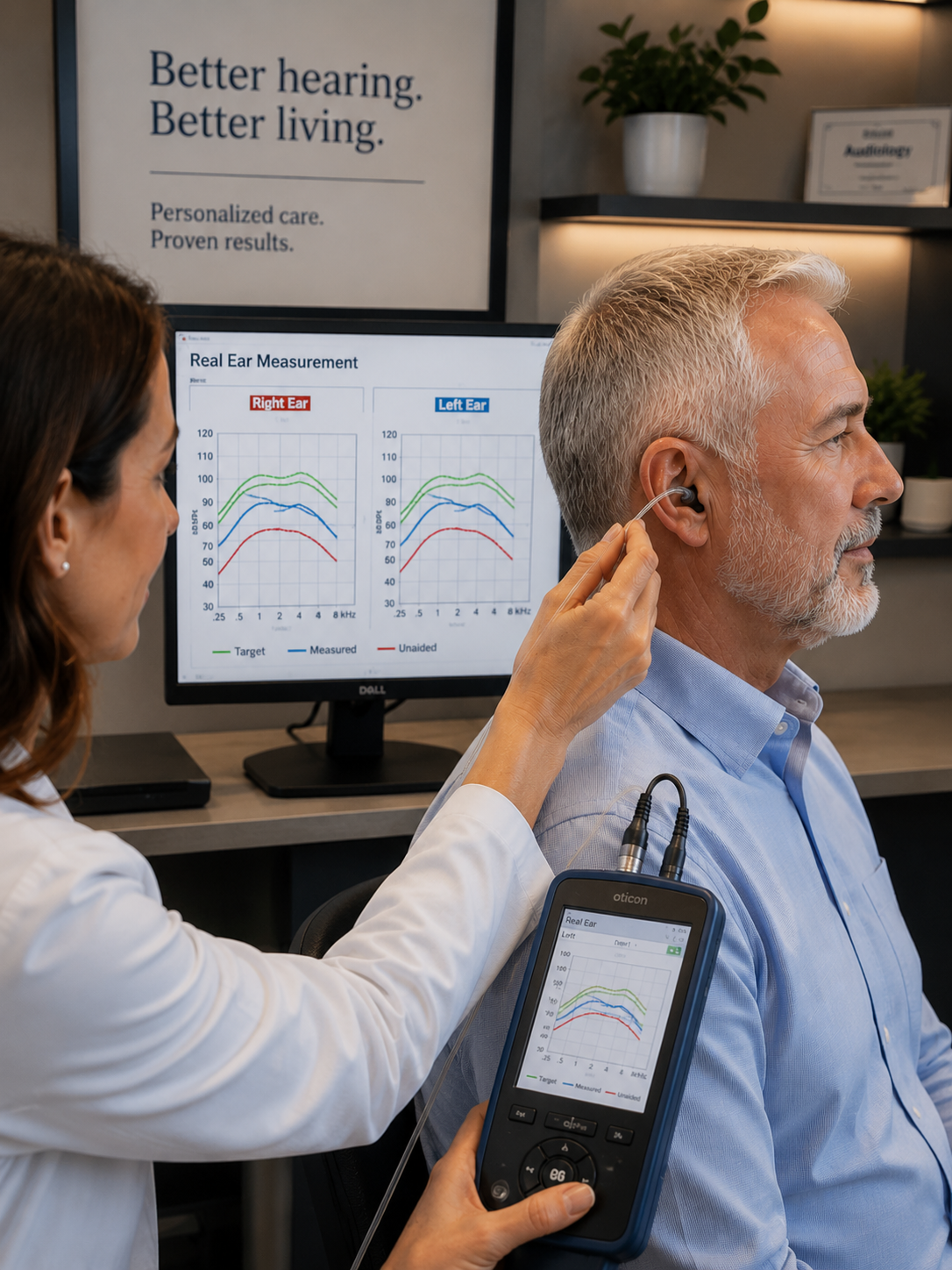
The hearing-aid pathway includes more than the hearing aids themselves. It may include Audiologist-led hearing aid fitting, Real-Ear Measurement verification, warranty support, follow-up adjustments, troubleshooting, and ongoing care from your Audiologist.
Financing may be helpful when insurance covers only part of the total cost, when a patient is upgrading older hearing aids, when stronger support in background noise is clinically appropriate, or when delaying care would keep communication and independence harder than necessary.
The purpose of financing is not to oversell care. It is to make appropriate care easier to act on once the recommendation is clear.
Important Note: 0% financing options are available for eligible patients and are subject to approval.

You should not have to decode confusing benefit language before asking for help.
Insurance wording is often vague, and hearing-related coverage is not always easy to interpret. Many patients are unsure whether testing, hearing aids, follow-up care, or upgrades are included in a meaningful way.
Our role is not to replace your insurer, funding program, agency, or tax professional. Our role is to help you understand the process more clearly, including what questions to ask, what paperwork may be needed, and what can be clarified before moving forward.
Some patients may have support through extended health benefits, Health Spending Accounts, WorkSafeBC, Veterans Affairs Canada, disability-related pathways, workplace benefits, occupational programs, or tax-time documentation. These details can change, so exact eligibility should always be confirmed directly.

If you have extended health insurance through work, retirement benefits, or a family plan, you may have hearing-aid coverage and not realize it. Coverage amounts, replacement cycles, direct-billing availability, and eligibility rules vary widely.
If hearing loss may be connected to workplace noise exposure in British Columbia, WorkSafeBC may be part of the hearing-care pathway. Puretone can help with the Audiological side of the process, including assessment by a Registered Audiologist and clinic-side documentation where applicable.
Veterans may have hearing-related care pathways through Veterans Affairs Canada. If VAC support may apply, your Audiologist can help with the Audiological side of the process, including hearing assessment, documentation, and clinic-side guidance.
Patients receiving Persons with Disabilities support or related BC ministry assistance may have hearing-related funding pathways available depending on eligibility, documentation, and current program rules.
Patients often ask whether regular BC MSP covers hearing aids. In most cases, hearing aids are handled outside regular MSP coverage, which is why private insurance, institutional pathways, financing, disability-related support, and tax documentation may become important.
Patients also ask whether hearing aids can be claimed as an eligible expense at tax time or whether severe hearing impairment may be relevant to the Disability Tax Credit. Puretone does not provide tax advice and does not determine CRA eligibility. What we can provide is organized hearing-related documentation, receipts, and Audiological information where appropriate.
Sometimes the financial conversation is really an upgrade conversation, a family conversation, or both.
Some patients already wear hearing aids but now find background noise, group conversation, phone calls, or daily listening more difficult than before.
In these cases, the question is not only whether new technology is available. The question is whether the current hearing aids and hearing aid fitting still match the patient’s hearing, lifestyle, independence goals, and daily listening needs — something your Registered Audiologist can review.
Financial Accessibility can help when an upgrade is appropriate but the payment pathway feels unclear.
Sometimes the decision involves a couple, an adult child helping a parent, or a family trying to understand whether now is the right time to act.
We welcome loved ones into the conversation so everyone understands the recommendation, the value of the Audiologist-led care being discussed, and the practical options available.

Where direct billing is available and appropriate, our team helps patients through that process. Availability can vary depending on the insurer, plan type, and claim pathway.
Yes. 0% financing options are available for eligible patients to help make hearing technology more manageable through structured monthly payments, subject to approval.
We can help guide the process, but exact coverage depends on your specific plan and provider. Your insurer is the final source for plan details, limits, eligibility, direct-billing availability, and reimbursement rules.
Yes. Your first appointment is an Audiological Assessment with a Registered Audiologist. Booking that assessment does not commit you to purchasing Prescription Hearing Aids, starting a hearing aid fitting, or applying for financing.
In most cases, regular BC MSP does not cover hearing aids. Private insurance, institutional pathways, financing, disability-related support, and tax-time documentation may be relevant instead.
Where relevant, we can help explain what documentation or next step may be appropriate. Patients with a work-related or veteran history may qualify for WorkSafeBC or Veterans Affairs Canada pathways. Other disability-related or ministry pathways may also apply in some situations. Exact rules and eligibility must be confirmed with the relevant program.
Many patients explore this question at tax time. Puretone can provide receipts and hearing-related documentation for your records. Tax eligibility should be confirmed through current CRA rules or your tax professional.
Eligibility depends on how hearing impairment affects daily function and whether CRA criteria are met. Puretone can provide hearing documentation where appropriate, but eligibility decisions are made through the CRA process.
Yes. Many hearing-care decisions are made as a couple or with support from family. We welcome loved ones into the conversation so everyone understands the recommendation and the practical pathway forward.
Yes. Financial Accessibility can help when a patient already wears hearing aids but now needs a better solution because the current technology, hearing aid fitting, or follow-up support no longer matches their hearing or daily environments. Your Audiologist will review whether an upgrade is appropriate.
No. The Registered Audiologist’s hearing-care recommendation should come first. Insurance, funding, or financing should support the right plan, not replace it with the wrong one.
In some cases, yes. If your coverage pays part of the cost, 0% financing options are available for eligible patients to help make the remaining balance more manageable, subject to approval.
0% financing options are available for eligible patients through Puretone clinics across Surrey, White Rock / South Surrey, and Vancouver. Eligibility, approval, and final payment details must be confirmed before moving forward.
The first step is not solving the payment question alone. The first step is understanding what your hearing actually needs.
If hearing has become harder, start with a proper Audiological Assessment with one of our Registered Audiologists. Once the recommendation is clear, we can help you understand the most practical way to move forward.
That may include direct billing guidance, insurance documentation, Health Spending Account discussion, 0% financing options for eligible patients, WorkSafeBC or Veterans Affairs Canada pathways where applicable, disability-related support guidance, tax-time documentation, or other relevant pathways where appropriate.
Sometimes the bigger cost is continuing to delay care that is already appropriate — especially when hearing difficulty is affecting communication, confidence, and independence.