

Puretone Hearing Clinic -Registered Audiologists Surrey and Vancouver

Real-Ear Measurement for More Accurate Hearing Aid Fittings

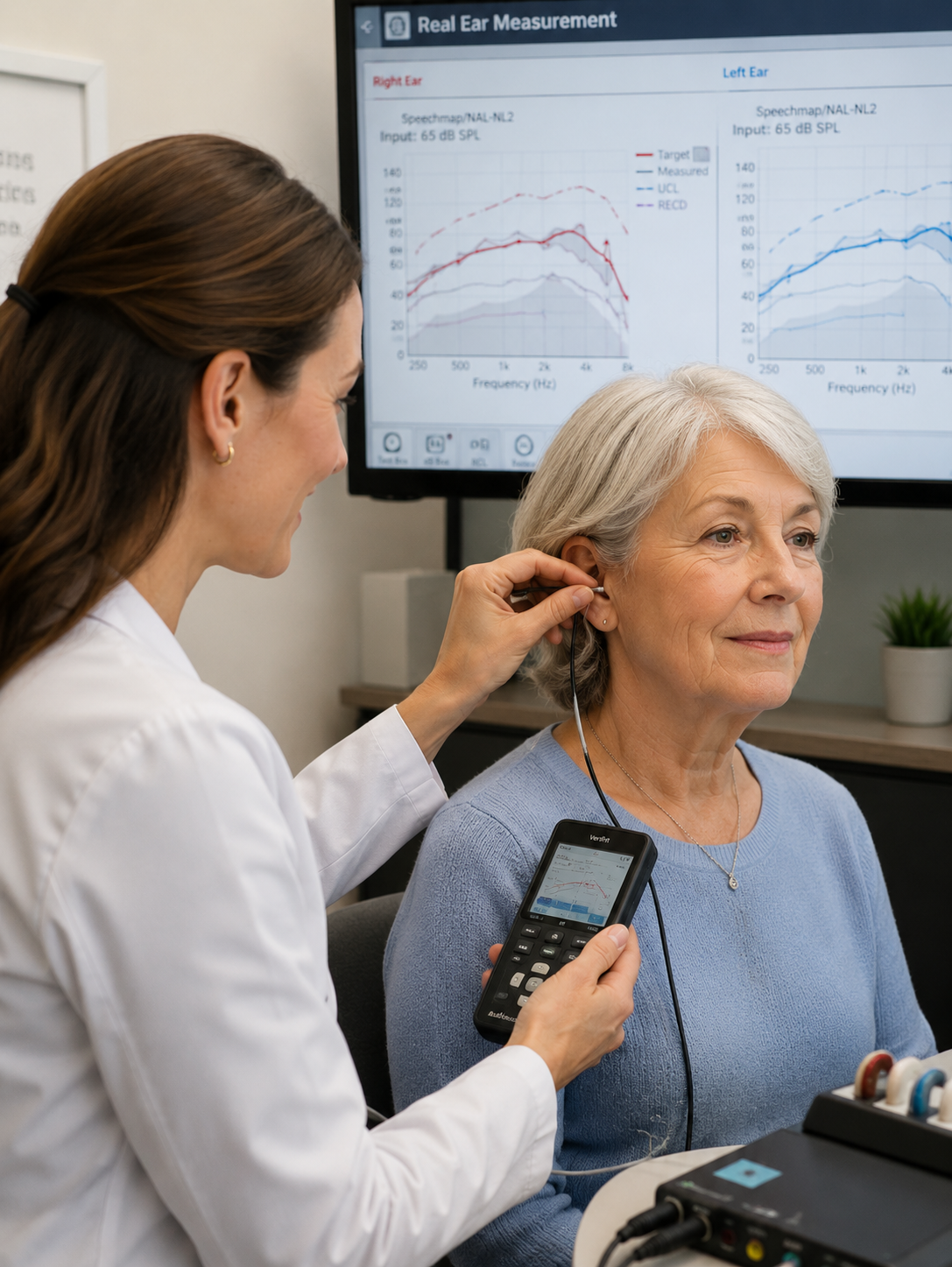
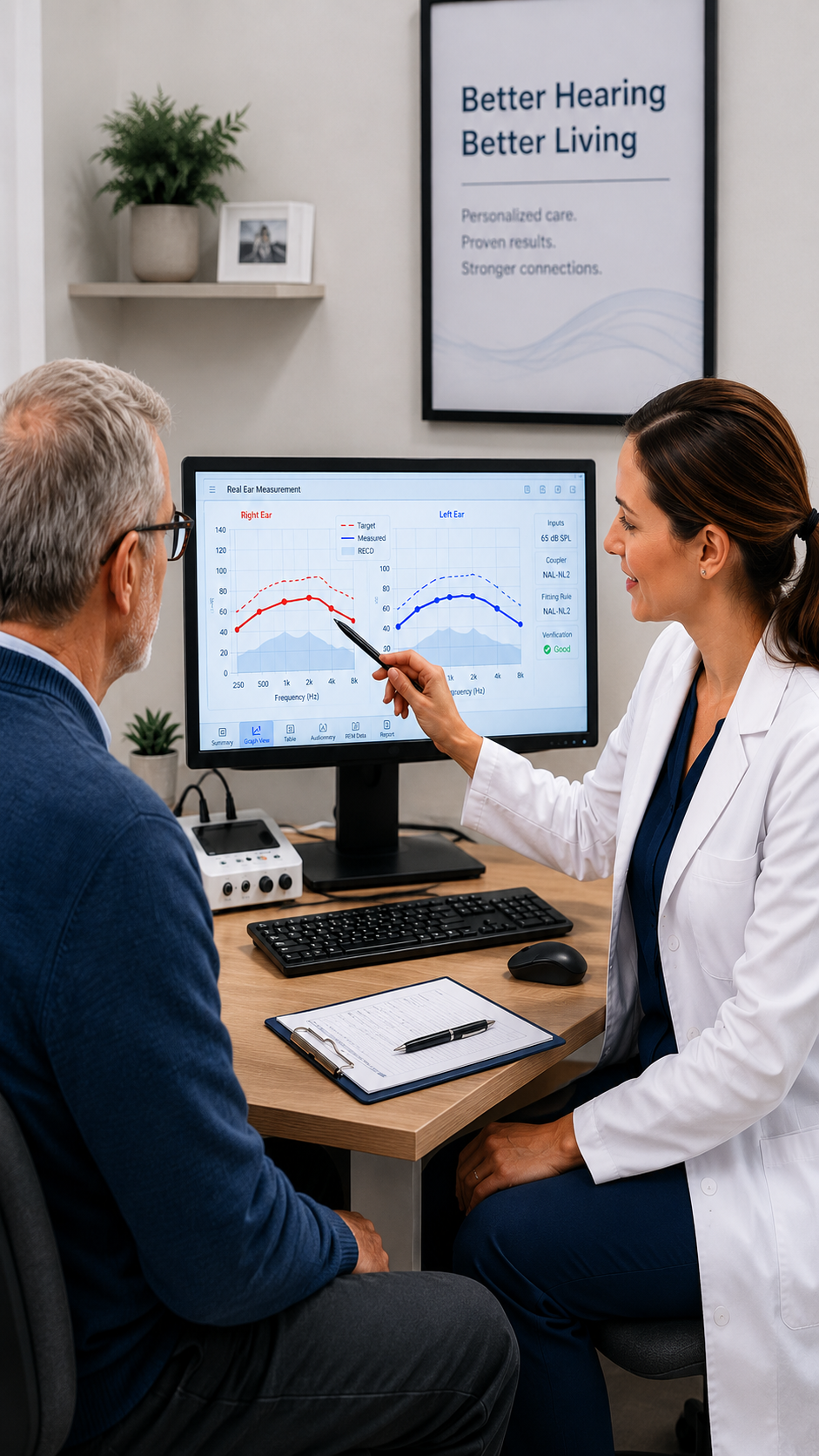
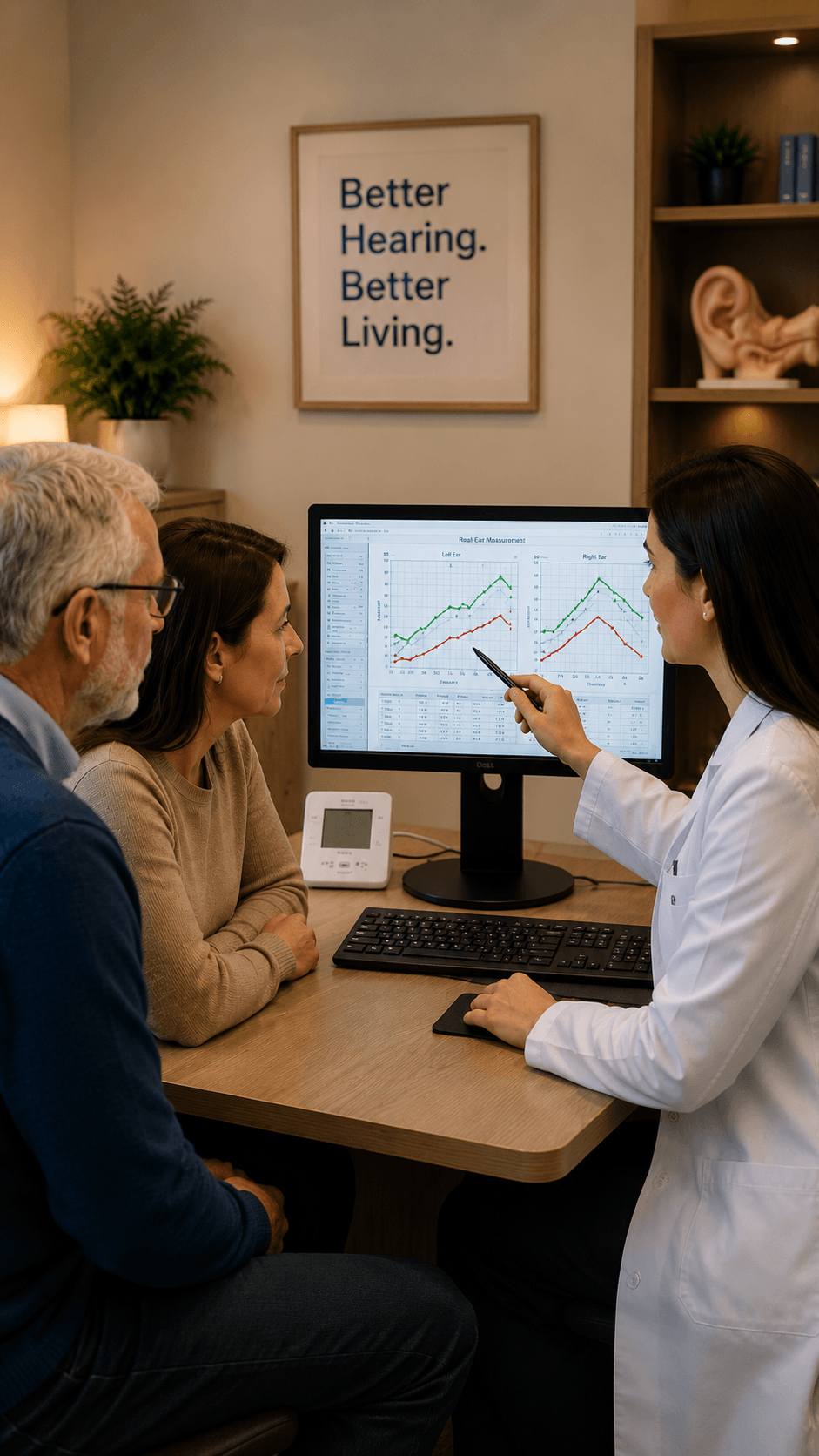
Puretone uses Real-Ear Measurement to check how hearing aids are performing in your ears during an Audiologist-led hearing aid fitting, not just how they look on a computer screen.
One of the clearest signs of an incomplete fitting is this: the hearing aids turn on, but speech still does not sound right. Voices may feel soft, sharp, hollow, or uneven even after the devices have been programmed.
Brand and technology can matter, but REM focuses on a more specific question: what sound is actually reaching your eardrum after the hearing aid is placed in your ear?
Every ear canal is shaped differently. Sound behaves differently inside your ear than it does in fitting software. If hearing aids are only programmed from an estimate and handed over, the fitting may be incomplete.
At Puretone Hearing Clinic, our Registered Audiologists use Real-Ear Measurement, often called REM, as part of our Audiologist-led hearing aid fitting process for new Prescription Hearing Aids. This helps us fine-tune the hearing aids for speech clarity, comfort, independence, and better daily listening.
  • Registered Audiologists
  • Measurement-Based Fitting
  • Real-Ear Measurement
  • Surrey
  • White Rock
  • Vancouver
  • Measured in the Ear
  • Clearer Speech Targets
  • More Accurate Fitting
  • Less Guesswork

Why Real-Ear Measurement Matters

A hearing aid fitting based only on software is still a prediction. REM shows what is actually happening in the ear.
Hearing aid software uses your hearing test to estimate how much sound should be delivered at different pitches. That estimate is a useful starting point, but it does not account for every detail of your ear canal.
The size, shape, and acoustics of your ear affect how sound reaches the eardrum. Without measuring that sound directly, speech may still feel weak, sharp, muffled, or unbalanced.
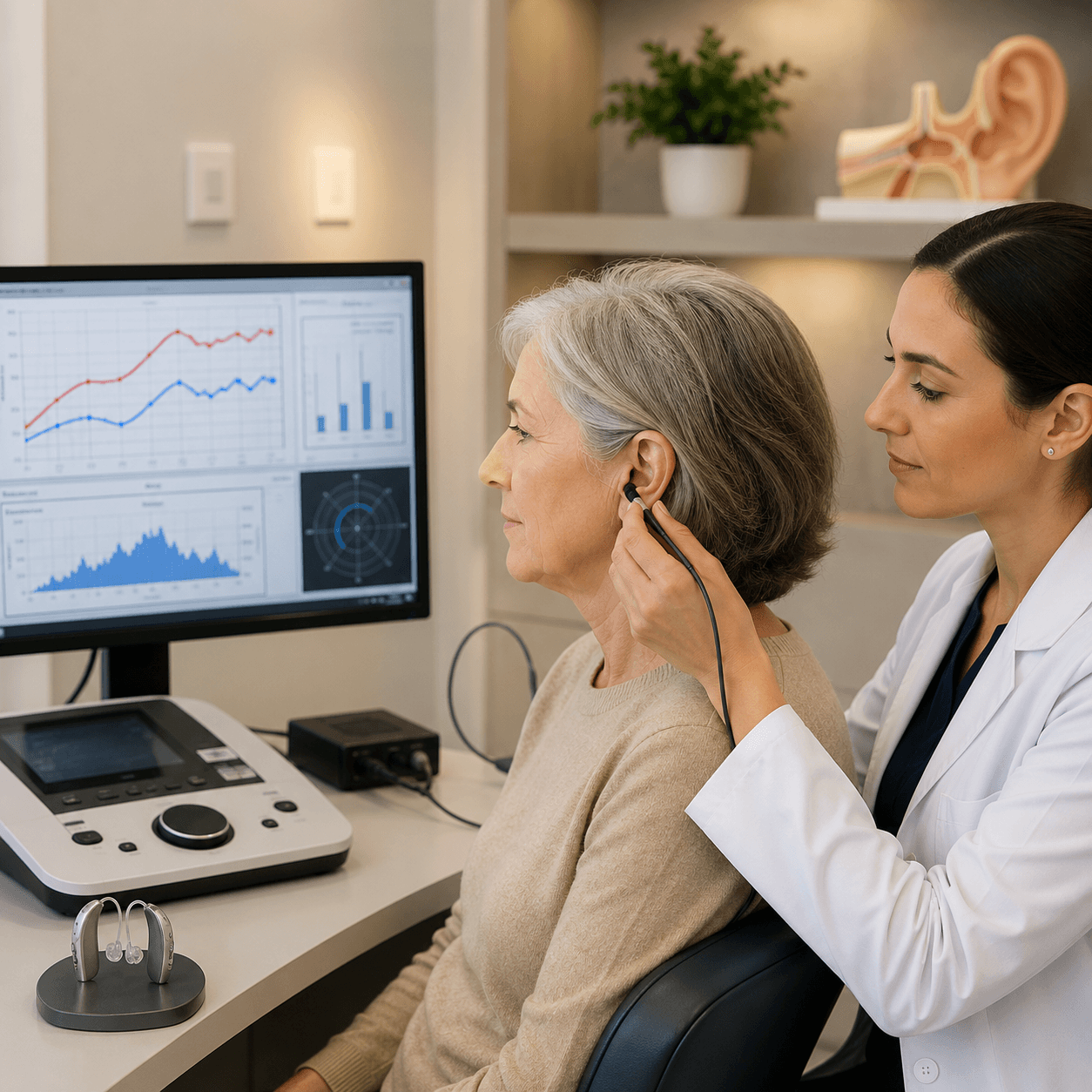
REM lets your Registered Audiologist measure the hearing aid output while you are wearing it. We can then compare the result to your hearing targets and adjust the hearing aid fitting more precisely.
The difference is simple: software starts the fitting, but measurement helps confirm it.

What Happens During the REM Process?

The process is comfortable, efficient, and designed to make the hearing aid fitting more precise.

01

A Small Measurement Tube

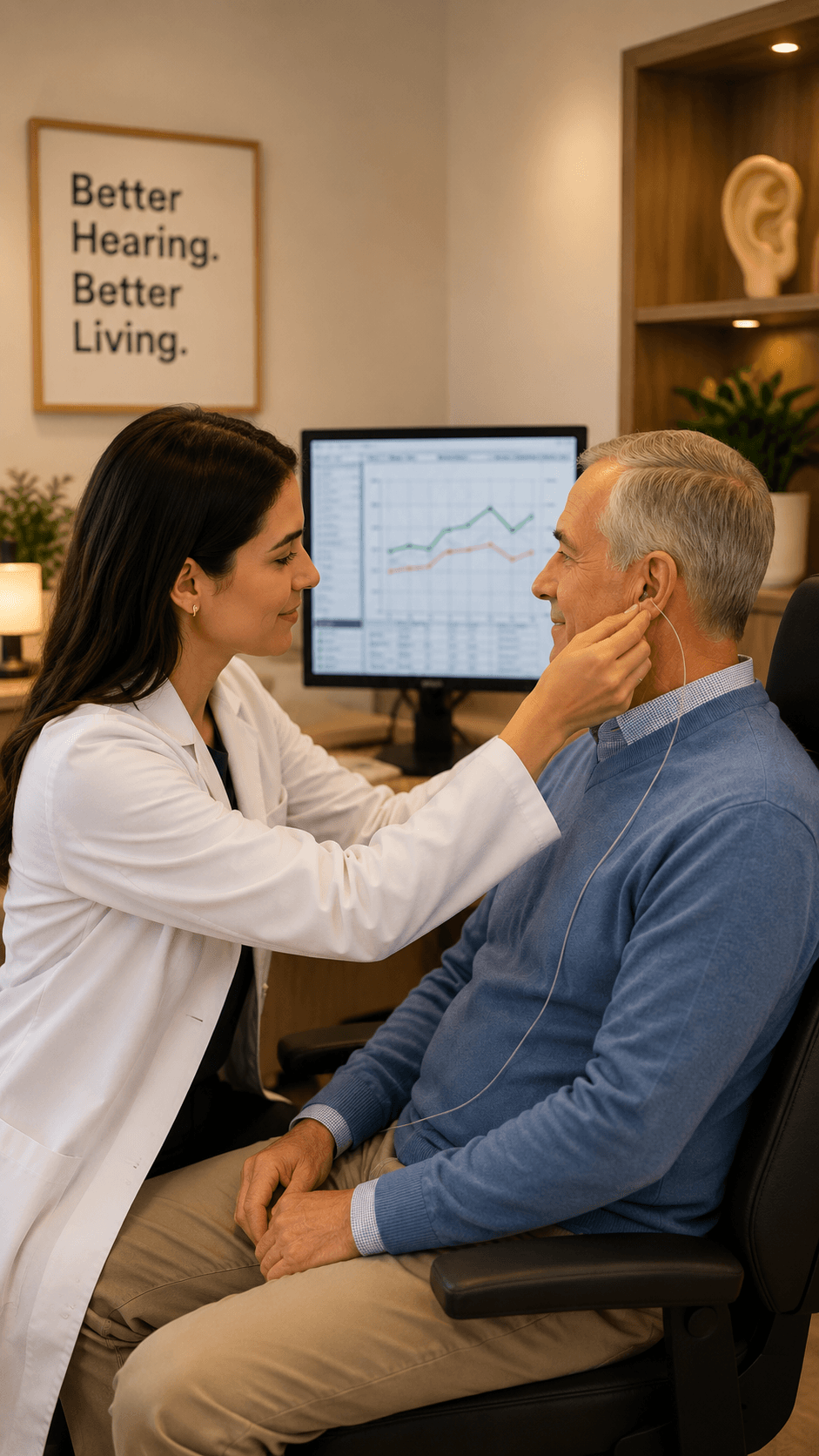
A very thin, soft tube is placed in the ear canal alongside the hearing aid. Most patients find this easy and comfortable.

02

Speech-Level Measurement

A speech signal is played while the hearing aid is in place. The tube measures what the hearing aid is actually delivering inside the ear.

03

Comparison to Your Targets

Your Audiologist compares the measured result to the speech targets based on your hearing test.

04

Fine-Tuning the Hearing Aid Fitting

If the hearing aid is too weak, too strong, or unbalanced in certain areas, we adjust the settings while measuring the result.

Estimated Fit vs Measured Fit

Estimated Fit:

The hearing aid is programmed using software based on your hearing test and a general model of the ear.
What Can Happen:
  • the fitting may look acceptable on screen
  • speech may still sound unclear
  • some sounds may feel too sharp or too soft
  • background noise may feel overwhelming
  • the fitting may never be physically confirmed in the ear

Measured Fit:

The hearing aid is checked inside your actual ear canal using REM.
What Can Happen:
  • the fitting is compared to your hearing needs
  • speech levels are adjusted more accurately
  • comfort and clarity are fine-tuned using real output
  • the result is physically checked instead of assumed
Programming creates the starting point. Measurement confirms whether the fitting is truly reaching the target.

What REM Can Improve in Daily Life

We do not use REM just to create graphs. We use it to improve real-world hearing, daily confidence, and independence.
When hearing aids are measured and adjusted properly, the benefit often shows up in everyday moments. Speech may feel clearer, sound may feel more balanced, and listening may take less effort.
This matters because hearing aids should not simply make the world louder. They should help speech become easier to follow.
  • clearer speech during family conversations
  • better balance between soft and loud sounds
  • more comfortable listening through the day
  • stronger confidence in the fitting
  • less strain in everyday communication
  • fewer “something still does not feel right” moments

Why REM Protects Your Hearing Aid Investment

REM protects the value of the fitting appointment itself. It gives your Audiologist objective information instead of relying only on default settings, quick reactions, or trial-and-error adjustment.
This is especially important with modern Smart Hearing Aids. Advanced background-noise support and speech processing still need to be matched to your ears, hearing profile, and daily listening needs through a careful hearing aid fitting.
REM is where technology choice becomes a measured clinical fitting rather than a software assumption.
When the fitting is measured properly, patients can feel more confident using their hearing aids in real life instead of depending on guesswork or avoiding difficult listening situations.

Why Every Clinic Does Not Use REM Routinely

REM takes extra time, equipment, training, and an Audiologist-led hearing aid fitting process built around accuracy.
Many patients are surprised to learn that not every hearing-aid fitting is measured in the ear. In some settings, appointments are shorter and fittings rely more heavily on software estimates, patient reactions, and quick adjustments.
That may save time, but it can leave the patient with a result that was never fully checked.
At Puretone, we believe that if hearing aids are being prescribed, the fitting should be measured properly whenever appropriate by a Registered Audiologist. Patients deserve more than a best guess or a product-first fitting.
The point of REM is not complexity. The point is accuracy

Before Replacing Hearing Aids, Check the Fit

Some hearing aids need replacing. Others were never fitted properly in the first place.
Some patients arrive after a previous fitting elsewhere that never felt quite right. They may wear the hearing aids inconsistently because sound is harsh, weak, unbalanced, or unreliable in the places they need help most.
If this sounds familiar, you may not need to start over immediately. A Hearing Aids Second Opinion can help determine whether the issue is the fitting, programming, verification, repair needs, your current hearing, or the technology itself.
Using REM, your Audiologist can measure how your current hearing aids are performing in your ears and explain whether a more accurate hearing aid fitting or better adjustment is possible.
If the devices are past their useful range, lack needed features, or no longer match your hearing, we explain that clearly too. REM helps separate fitting problems from true technology limits.

Why Patients Switch to Puretone for Real-Ear Measurement

Many patients come to Puretone because their previous hearing aid fitting was programmed, but never truly checked.
Patients often tell us the frustrating part is not only the cost of the hearing aids. It is the lack of a clear explanation for why everyday speech still feels harder than expected.
REM gives patients and families something more concrete. It shows whether the hearing aids are meeting the intended targets or whether the fitting is missing important areas.
That kind of measured explanation can help patients understand why hearing aids felt too loud, too soft, harsh, unclear, or unreliable.

Helping a Parent Trust Their Hearing Aids Again

Adult children often tell us their parent has hearing aids sitting in a drawer. Common reasons include: “They are too loud,” “They whistle,” “They make noise worse,” or “They do not help enough.”
Sometimes the problem is not that hearing aids cannot help. The issue may be that the fitting was never verified carefully enough.
If your loved one has lost confidence in their hearing aids, bring them in. Your Registered Audiologist can review the hearing aids, measure where appropriate, and explain what may be possible.

Fees and Financial Accessibility

Getting a properly measured fitting should feel clear, not financially confusing.
For new Prescription Hearing Aids fitted at Puretone, Real-Ear Measurement is part of our Audiologist-led hearing aid fitting process. We do not treat proper fitting verification as a luxury add-on.
For patients booking a Hearing Aids Second Opinion on hearing aids purchased elsewhere, a professional evaluation fee may apply because the appointment may include assessment, review, measurement, and guidance.
: If new hearing technology is recommended, Puretone can help patients understand extended health insurance and available coverage, relevant support pathways such as WorkSafeBC or Veterans Affairs Canada where a patient may qualify, and 0% financing options for eligible patients.

Frequently Asked Questions About Real-Ear Measurement

No. The measurement tube is very small and soft. Most patients find the process comfortable.

For new Prescription Hearing Aids fitted at Puretone, REM is part of the fitting process. If you are booking a Hearing Aids Second Opinion for hearing aids purchased elsewhere, a professional evaluation fee may apply.

Yes. If you book a Hearing Aids Second Opinion, your Audiologist can use REM where appropriate to evaluate hearing aids you already own, even if they were purchased somewhere else.

The physical measurement and fine-tuning process is usually efficient during the fitting appointment. The purpose is to improve accuracy without making the visit unnecessarily complicated.

No hearing aid restores perfectly natural hearing, but REM helps make sure the hearing aids are matched more accurately to your hearing needs.

Yes. Ear canals are shaped differently, so sound behaves differently from one person to another.

Yes. REM can help determine whether the issue is the hearing aid fitting, settings, hearing changes, or the technology itself.

No. That is why it is worth asking how a clinic verifies hearing-aid fittings before moving forward.

Advanced hearing technology can only perform well when it is fitted properly. REM helps confirm that premium technology is delivering appropriate benefit in the ear.

No. REM is commonly used during new fittings, but it can also be useful during Hearing Aids Second Opinions for patients who already wear hearing aids.

Ready to Get Your Hearing Aids Set More Accurately?

Do not settle for hearing aids that were only programmed on a computer and never properly checked in the ear by a Registered Audiologist.
Whether you are exploring Prescription Hearing Aids for the first time or trying to understand why your current hearing aids are underperforming, Puretone can help you get clearer answers.
The goal is not to produce a graph for its own sake. The goal is to make the hearing aid fitting more accurate so daily communication feels clearer, less effortful, and more dependable.

Surrey — Scott Road

A strong fit for families, practical support, and patients who want a clear starting point.

Surrey — King George Boulevard

A convenient clinic for dependable follow-up, senior-friendly support, and hearing-aid care.

White Rock / South Surrey

A premium setting for advanced hearing technology, tinnitus support, and stronger social clarity.

Vancouver — Main Street

A strong fit for discreet technology, connectivity, and hearing support in busy city environments.
The goal is not to produce a graph for its own sake. The goal is to make the hearing aid fitting more accurate so daily communication feels clearer, less effortful, and more dependable.