

Puretone Hearing Clinic -Registered Audiologists Surrey and Vancouver

Tinnitus Assessment and Support

If you hear ringing, buzzing, hissing, clicking, static, or whooshing that other people cannot hear, you are not imagining it. Tinnitus is real, and it is worth understanding properly with a Registered Audiologist.
For some patients, tinnitus is a soft ring in quiet rooms. For others, it becomes a constant buzz, hum, hiss, click, static sound, or heartbeat-like whoosh.
It can be frustrating because other people cannot hear it. It can also be tiring because the sound is not always easy to ignore, especially at night or during quiet moments.
If you have been told that nothing can be done and you simply have to live with it, that is not the full picture. There is no single quick cure for tinnitus, but many patients can be helped with careful Registered Audiologist-led assessment, better understanding, sound support, hearing care where appropriate, and a practical management plan.
At Puretone Hearing Clinic, your Audiologist begins by looking at the hearing system. We check whether hearing loss, ear health, sound sensitivity, noise exposure, middle-ear concerns, current hearing aids, or another hearing-related factor may be part of the picture.
The goal is not to promise silence. The goal is to help you understand the tinnitus and reduce how much control it has over sleep, focus, confidence, independence, and daily life.
  • Audiologist-Led Tinnitus Support
  • Hearing Tests
  • Sound Support Guidance
  • Surrey, White Rock, and Vancouver

What Tinnitus Is and Why It Can Feel So Draining

Tinnitus is hearing a sound when there is no outside source producing it. The difficulty often comes from how much attention the brain gives that sound.
Tinnitus may sound like ringing, buzzing, humming, hissing, clicking, static, whistling, or pulse-like whooshing. It may come and go, or it may feel more constant.
Many patients notice it most at night. When the room is quiet, there is less outside sound competing with the internal noise, so the ringing or buzzing can feel louder.
That is one reason complete silence is not always helpful. Gentle background sound can sometimes reduce the contrast that makes tinnitus stand out.
The sound itself is only part of the problem. The strain often comes from the attention it demands: trying to sleep, trying to focus, trying not to check whether it is still there.
At Puretone, we do not dismiss the experience. Your Registered Audiologist helps you understand what may be making the tinnitus more noticeable and what can make it easier to manage.

What Can Contribute to Tinnitus?

Tinnitus often becomes more noticeable when something in the hearing system, stress level, sleep pattern, or listening environment changes.

Tinnitus rarely appears in complete isolation. That is why an Audiological Assessment matters more than internet guessing.

Common Contributors:

  • Hearing loss or hearing change
  • Noise exposure
  • Stress or anxiety
  • Poor sleep
  • Ear or middle-ear concerns
  • Sound sensitivity
  • Some medication effects
  • Jaw clenching, TMJ tension, neck tension, or upper-body tension
  • A history of loud work, music, machinery, tools, aviation, military, or industrial noise exposure
Tinnitus and hearing loss often appear together. Even when hearing changes feel subtle, reduced access to outside sound can make internal sound easier for the brain to notice — which is why hearing aids may be part of the discussion for some patients.
Some patients also notice tinnitus after ear-related changes, pressure, illness, or sound exposure. Your Audiologist can help clarify whether the hearing system may be contributing and whether additional medical guidance is needed.

This can be especially relevant for patients with a history of noise exposure from work, construction, trades, industrial settings, aviation, military service, music, or long-term loud environments.

The more clearly your Audiologist understands the pattern, the better we can guide what should happen next.

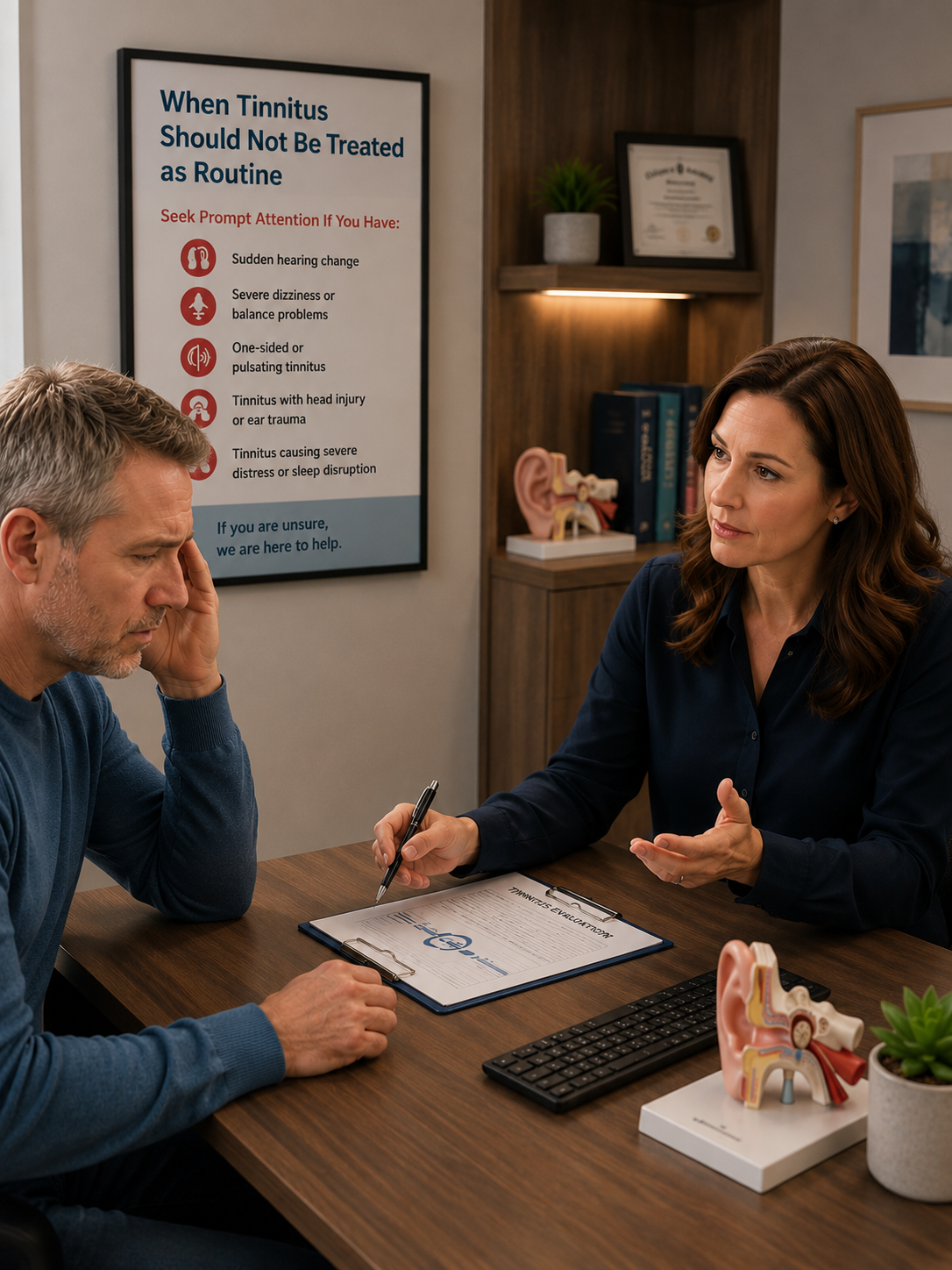
When Tinnitus Should Not Be Treated as Routine

Some tinnitus patterns need faster attention and should not be treated as a casual wait-and-see issue.
Many tinnitus concerns can begin with a hearing and tinnitus assessment. Others need quicker medical guidance or a different pathway.
Tell our team when booking if the sound is suddenly new, strongly one-sided, pulse-like, linked with sudden hearing change, connected with severe dizziness, or causing major distress.

Red Flag:

  • Sudden tinnitus with sudden hearing change
  • Persistent tinnitus mainly in one ear
  • Pulsating or heartbeat-like tinnitus
  • Tinnitus with severe dizziness or major balance change
  • Tinnitus causing severe sleep disruption or major distress
  • Tinnitus after head injury or major ear-related trauma
If any of these apply, seek urgent care promptly or contact an appropriate health professional. If you are unsure, tell our team when booking so we can help guide the safest next step.

How We Assess Tinnitus at Puretone

Tinnitus support works best when the process is calm, structured, and based on your hearing picture.
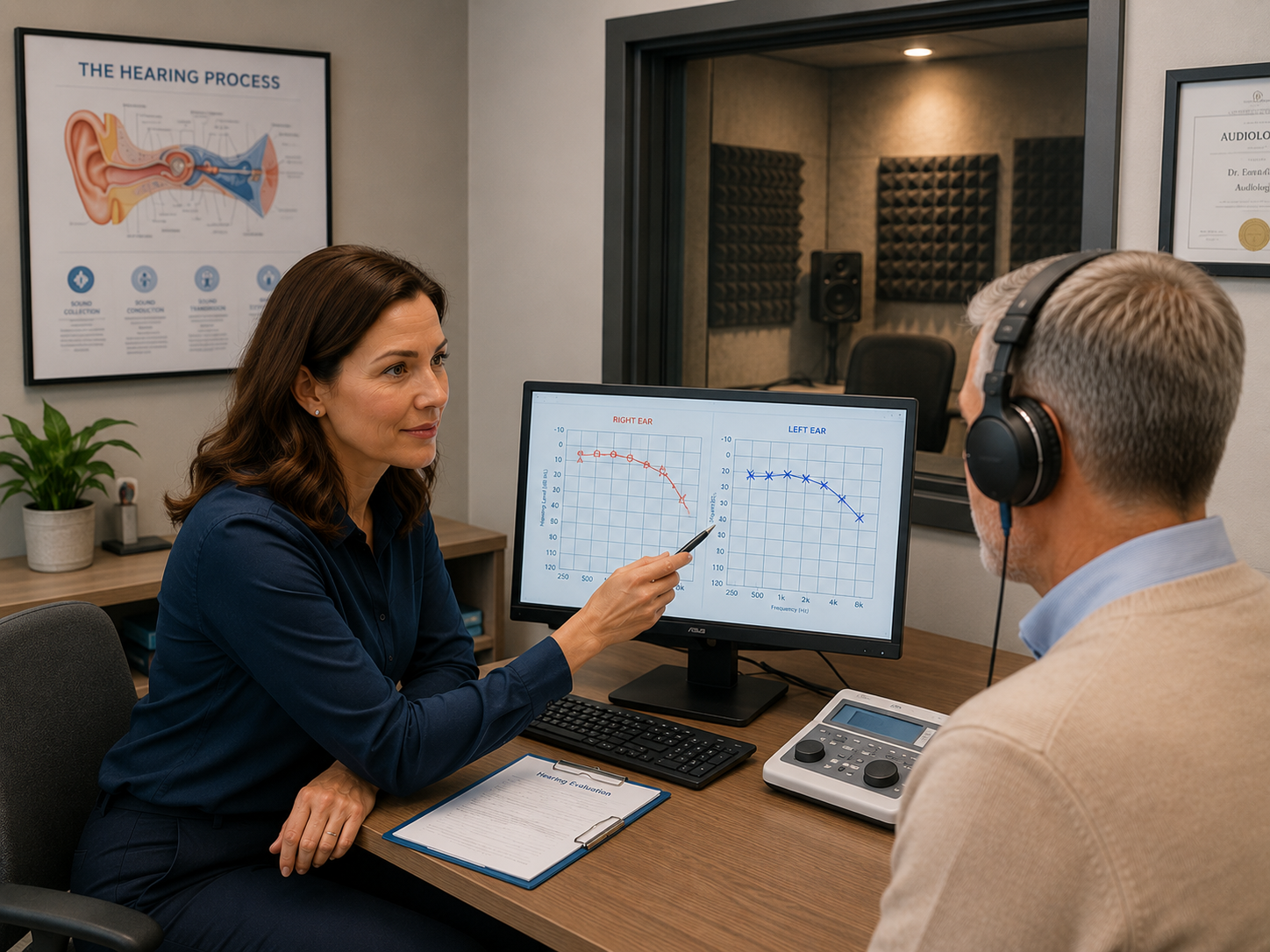
Tinnitus care should not be guesswork. Your Registered Audiologist begins by understanding your hearing, your symptoms, current hearing aids if you use them, and the situations where the sound feels most intrusive.
01

Hearing Test

We assess your hearing levels, speech clarity, and whether hearing loss or underperforming hearing aids may be contributing to the tinnitus experience.
02

Ear and Middle-Ear Check

Depending on the case, testing may include pure tone audiometry, speech audiometry, tympanometry, and other appropriate hearing-related checks. These help us understand whether hearing loss, middle-ear pressure, ear health, or another ear-related factor may be involved.
03

Tinnitus History and Triggers

Your Audiologist discusses when the sound started, how it behaves during the day, when it is most noticeable, and whether stress, sleep, noise exposure, sound sensitivity, or quiet environments make it worse.
04

Impact Review

Because tinnitus is invisible, it is often misunderstood. We ask about sleep, concentration, emotional strain, sound tolerance, and daily life so the plan reflects the actual burden.
05

Management Planning

Once the picture is clearer, your Audiologist explains the most appropriate pathway. That may involve monitoring, hearing support, sound-based strategies, counselling, medical referral where appropriate, hearing aid fitting review where relevant, or a more structured tinnitus plan.
Puretone’s tinnitus pathway carries added expertise through Syed Ullah, M.Sc., Registered Audiologist, who has advanced training connected to the Jastreboff tinnitus framework. This supports a more structured discussion around tinnitus assessment, sound support, and practical management planning when needed.
All Puretone locations support tinnitus assessment. White Rock / South Surrey may be especially suitable when tinnitus, listening effort, and cognitive strain overlap.
The goal is not to push every patient toward the same answer. The goal is to understand your tinnitus pattern and guide the next step clearly.

How Hearing Aids and Sound Support Can Help

If tinnitus is linked with hearing loss, properly fitted Prescription Hearing Aids are often one of the most useful tools for reducing its impact.
When hearing loss is part of the picture, restoring missing outside sound through well-matched hearing aids can make tinnitus feel less dominant. The brain has more real sound to work with, which may reduce how much attention the internal sound receives.

Modern Prescription Hearing Aids may also include sound-support features that soften the contrast between quiet and tinnitus. A Registered Audiologist can explain whether hearing aids or a hearing aid fitting review are appropriate for your hearing profile.


For many patients, the benefit is not that tinnitus disappears completely. The benefit is that it stops taking over attention in the same way, making sleep, conversation, and independent daily routines feel more manageable.
Sound enrichment can also help. The goal is not simply to cover the noise. It is to help the brain stop treating tinnitus like an important signal that needs constant monitoring.
Over time, tinnitus may feel more like background sound and less like the centre of the room.
When hearing support is appropriate, the goal is to help tinnitus feel less dominant so patients can participate more comfortably in daily life, family conversation, and independent routines.

A Note on Cures and Internet Remedies

Be careful with anyone promising a quick tinnitus cure.
If you search for tinnitus relief online, you will quickly find pills, drops, supplements, apps, and devices promising fast results. That is one reason many tinnitus patients end up more discouraged than when they started.
It is important to be honest: there is no proven quick-fix cure that simply switches tinnitus off for everyone.
The stronger path is Registered Audiologist-led assessment, identification of likely contributors, and a management plan based on your hearing picture and daily life.
Meaningful relief often comes from better understanding, hearing support where needed, sound support, counselling, and a calmer response from the brain over time.
The goal is not false hope. The goal is practical relief built on a careful process.

Frequently Asked Questions About Tinnitus

Tinnitus is hearing a sound when there is no outside source producing it. It may sound like ringing, buzzing, humming, hissing, clicking, static, or a whooshing or pulsing sound.

Tinnitus often feels stronger in quiet settings because there is less outside sound competing with it. That is why many people notice it most when trying to rest or fall asleep.

Yes. Tinnitus often appears alongside some degree of hearing loss, even when the hearing change has not felt obvious yet.

Yes, sometimes. Changes in the ear or middle ear can affect how sound is heard and may make ringing or buzzing more noticeable. An Audiologist-led assessment can help clarify whether this is part of the picture.

Yes, for many patients they can, especially when tinnitus is linked to hearing loss. By restoring missing sound and adding structured sound support, properly fitted Prescription Hearing Aids may make tinnitus feel less intrusive. If you already wear hearing aids, a Registered Audiologist can review whether the fitting or settings may need adjustment.

Tinnitus is different for every person. The most important step is to identify likely contributors and build the right management plan. Even when the sound does not disappear fully, many patients can achieve meaningful relief and reduced day-to-day impact.

Tinnitus needs faster attention when it is sudden, strongly one-sided, pulse-like, linked with sudden hearing change, associated with severe dizziness, or causing major distress.

Yes, in many cases. A detailed hearing test with a Registered Audiologist is often one of the most important parts of tinnitus assessment because hearing loss is a common contributor.

Yes. We support tinnitus patients across Surrey, White Rock / South Surrey, and Vancouver. White Rock / South Surrey may also be a strong location when tinnitus, listening effort, and cognitive strain overlap.

Yes. Many patients notice tinnitus becomes more intrusive during periods of higher stress, poor sleep, or mental overload.

Depending on your symptoms and what we need to clarify, your assessment may include pure tone audiometry, speech audiometry, tympanometry, and other appropriate hearing-related checks.

Some patients with tinnitus also notice sound sensitivity or reduced tolerance for everyday sounds. If that is happening, it should be discussed during the assessment so the plan can account for both tinnitus and listening comfort.


You Do Not Have to Figure This Out Alone

Tinnitus can feel isolating because no one else can hear what you are hearing.
Spouses and family members may notice stress, sleep changes, frustration, or how the constant sound is affecting mood and concentration.
We welcome spouses, adult children, and supportive family members into the appointment when appropriate. That often helps everyone understand what tinnitus is, what it is not, and why the plan is based on careful assessment rather than internet myths.
This can be especially helpful when tinnitus is creating stress at home, reducing confidence, or making the patient feel too worn down to make clear decisions alone.

Get Clearer Direction for Tinnitus

You do not have to rely on internet guesswork or simply try to live around the noise. The first step is to understand what kind of tinnitus you are experiencing and what may be contributing to it.
The answer may involve ruling out an ear-related issue, identifying hearing loss, reviewing current hearing aids or hearing aid fitting where relevant, reviewing sound sensitivity, or building a sound-support plan.
The goal is not to promise a quick cure. The goal is to reduce how much control the sound has over sleep, focus, confidence, independence, and daily life.
Careful assessment first. Practical relief strategy second.